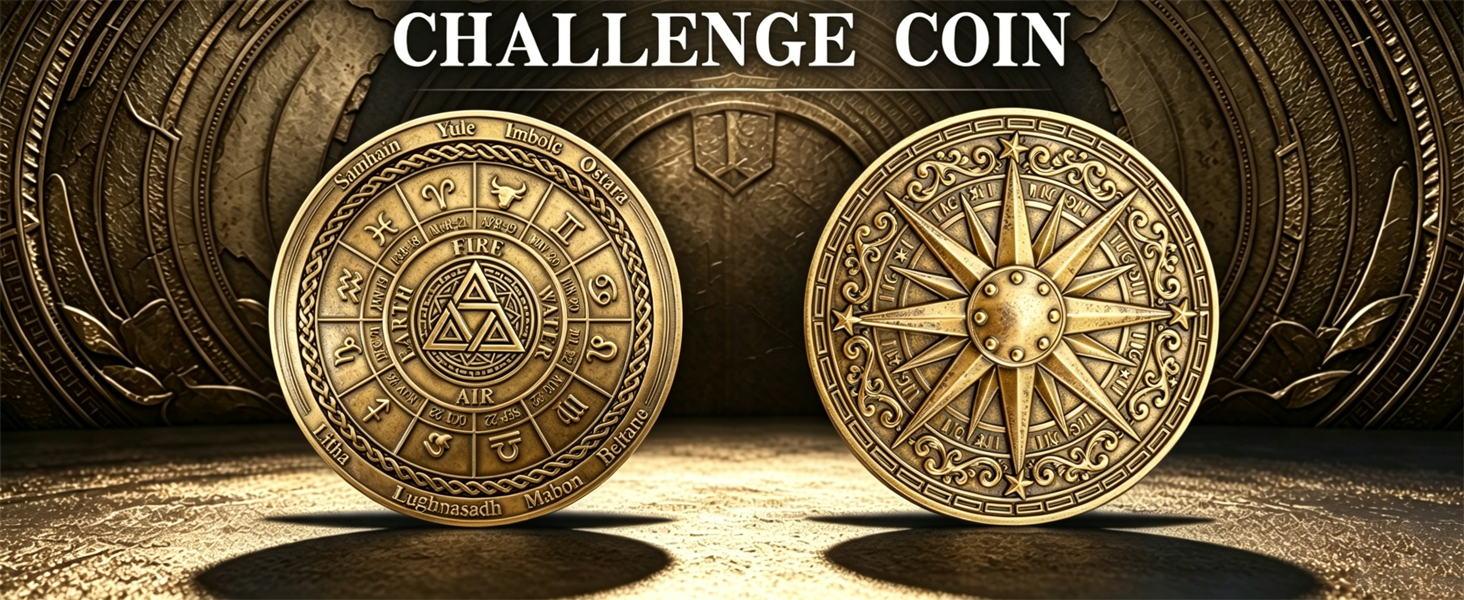
The Weight of Small Circles: Collectible Coins, Challenge Coins, and Sobriety Coins
Coins are ordinary objects. We drop them into parking meters, forget them in coat pockets, and find them beneath sofa cushions. Yet a coin can also be a vessel for memory, identity, and promise. The difference between loose change and a meaningful keepsake is rarely the metal itself. It is the story attached to it—the person, place, milestone, or hope it represents.
That is why three very different kinds of coins matter so much to so many people. Some are hunted by collectors, some are carried by service members, and some are received one day at a time. Each has its own language, its own rituals, and its own quiet power.
Why People Keep Coins
People keep coins because they are small enough to hold and heavy enough to remember. A coin can sit in a palm, turn over between fingers, and spark a memory faster than a photograph. It does not need batteries, Wi-Fi, or an app. It simply waits.
Collectible Coins: History in Your Palm
For numismatists, collectible coins are windows into history. A single date and mint mark can reveal where a nation was in its economy, its technology, and its artistic taste. Collectors study die varieties, errors, finishes, and edge designs. They learn to read condition, patina, and strike. What looks like a tiny circle to one person can be a puzzle, an investment, and a story to another.
But collecting does not have to be serious or expensive. Many people begin with a jar of pocket change or a folder of state quarters. Others focus on a theme: animals, ships, presidents, space, or coins from every country they visit. The best collection is not the largest one. It is the one that keeps you curious.
What Makes a Collection Personal
- A story: the coin you bought on a trip, inherited from a grandparent, or found while cleaning a house.
- A challenge: completing a date set, a series, or a type set.
- A connection: coins from a homeland, a military unit, a favorite sport, or a beloved fictional world.
Challenge Coins: A Shared Salute
Military and service culture has its own coin tradition. Challenge coins are often given to recognize achievement, membership, deployment, or a bond that words cannot fully capture. They are carried in pockets, displayed on desks, and exchanged in units, police departments, firehouses, and veteran groups.
The ritual matters. A challenge coin can be presented quietly after a mission or thrown across a table to test whether someone is carrying theirs. The details vary by unit and community, but the core idea remains: you belong to something, and someone thought you were worth honoring.
“A challenge coin is not a medal on a ribbon. It is a handshake you can keep.”
Modern challenge coins have moved far beyond the military. Companies give them to employees. Teams give them to volunteers. Conferences use them as speaker gifts. Families create them for reunions. The design may be playful or formal, but the message is always the same: this moment, this group, this person matters.
Sobriety Coins: Milestones You Can Hold
Recovery communities have their own form of currency: the sobriety coins often called tokens or medallions. They mark time—24 hours, 30 days, 60 days, 90 days, six months, one year, and beyond. For someone rebuilding a life, a coin can be a lifeline disguised as a circle of metal.
These tokens are usually simple, but their symbolism is deep. A triangle may represent unity, service, and recovery. A prayer or motto may offer strength. A date may stand for the day everything changed. Because recovery happens one day at a time, a pocket coin is a reminder that the next right choice is always available.
Displaying and Caring for Meaningful Coins
How you treat a coin depends on why you keep it. Serious collectible coins should be handled with clean hands, stored in holders, and protected from moisture and harsh chemicals. Aggressive polishing can erase mint luster and reduce value. A soft cloth and a cool, dry place are usually safer than a shiny finish.
Challenge coins and sobriety coins are often meant to be touched. A little wear can be part of their story. Still, you can protect them from deep scratches by keeping them in a dedicated pouch or display case. Some people rotate a few coins in their pocket; others frame them with ribbons, patches, or photos. A shadow box, a felt tray, or a simple wooden rack can turn a handful of coins into a small monument.
Choosing a Coin That Speaks
If you are giving a coin, think about the moment you want to honor. A graduation, a promotion, a retirement, a recovery milestone, or a first day on a new team all carry different emotional weight. The best design is not the busiest one. It is the one that captures the reason the coin exists.
Custom challenge coins can include a unit crest, a company logo, a motto, a date, or a private inside joke. Materials range from brass and nickel to enamel and antique finishes. Before ordering, decide what the coin must do: inspire, thank, remember, or unite. Then choose the size, shape, and words that serve that purpose.
The Quiet Power of a Pocket Reminder
In a world of notifications and disposable everything, a coin asks us to slow down. It has no screen. It has no feed. It has only weight, texture, and meaning. Whether it is a rare piece in a collection, a symbol of shared service, or a marker of another day sober, it does the same quiet work: it helps us remember who we are and what we are trying to become.
About the Author